
The Ultimate Guide to 9mm Ammo: Stopping Power, Recoil, and Hidden Ballistics
9mm ammo stands as the most widely used handgun cartridge in the world, defined by its 9x19mm Parabellum case and a typical 115- to 147-grain bullet. It functions through a self-contained primer and propellant charge that ignites upon firing, producing a controlled expansion of gas to drive the projectile down the barrel at velocities between 1,000 and 1,350 feet per second. Its balance of manageable recoil, dependable terminal ballistics, and high magazine capacity makes it ideal for both defensive shooting and target practice. For best performance, match bullet weight and jacketed hollow-point construction to your firearm’s barrel twist rate and intended use.
What Makes 9mm Luger the Most Versatile Handgun Cartridge Today
The 9mm Luger’s versatility in 9mm ammo comes down to its incredible balancing act of power, capacity, and shootability. You can feed it 115-grain loads for flat-shooting range practice, or switch to 147-grain subsonic rounds for suppressed use without changing your gun. For defense, modern jacketed hollow points expand reliably at standard velocities, yet the mild recoil keeps follow-up shots fast. This cartridge fits everything from compact carry pistols to full-size competition guns, and the same firearm cycles everything from light target loads to heavy +P defensive ammunition without adjustment. That dual-role capability—training cheaply with ball ammo, then loading premium defensive rounds—makes the 9mm Luger the only handgun cartridge you truly need for all purposes.
Ballistic Performance: Balancing Recoil, Velocity, and Stopping Power
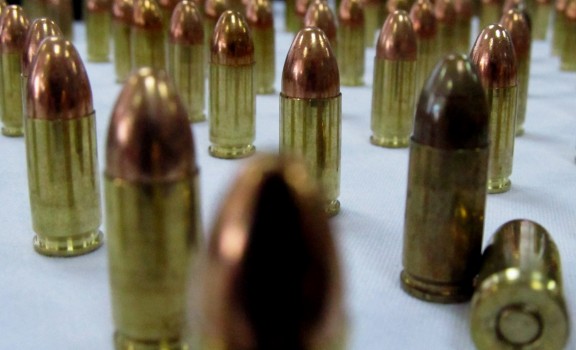
The 9mm Luger’s ballistic performance hinges on a pragmatic trade-off: generating sufficient velocity for reliable expansion while keeping recoil manageable for rapid follow-up shots. This balance delivers optimal stopping power in a service handgun without the muzzle flip of larger calibers. Choosing a 124-grain +P load maximizes velocity and penetration, whereas 147-grain subsonics prioritize suppressed performance over flat trajectory. The round’s versatility allows shooters to tailor recoil and energy to their specific needs, from competition to personal defense, ensuring the 9mm consistently outperforms heavier magnums in speed and control.
- Lighter bullets (115gr) offer flatter trajectories but snappier recoil; heavier bullets (147gr) reduce perceived recoil at the cost of velocity.
- +P ammo boosts velocity by 10-15% but increases recoil, demanding more grip strength and practice for control.
- Stopping power relies on bullet expansion velocity thresholds—typically 1,000–1,200 fps—rather than raw foot-pounds of energy.
Case Dimensions and Pressure Specs That Define the Round
The 9mm Luger’s versatility is locked into its case dimensions and pressure specs that define the round. The tapered, rimless case—19.15 mm long with a 9.01 mm mouth—feeds flawlessly from double-stack magazines, while the 0.754-inch rim diameter ensures reliable extraction under rapid cycling. SAAMI maximum pressure is 35,000 psi (piezo), a figure that balances snappy recoil against full power for defense loads, yet allows +P variants at 38,500 psi for hardened barriers. This headspace on the case mouth, not the rim, keeps chamber tolerances tight, boosting accuracy. The dimensions permit identical cartridges to run in subcompact pistols and carbines alike, from 3-inch barrels to 16-inch, without pressure spikes. That is why it cycles suppressed hosts and race guns with equal authority.
Why It Feeds Reliably in Most Semi-Automatic Pistols
The 9mm Luger’s case design is a huge reason why it feeds so smoothly. Its gentle taper and relatively short overall length let the round slide easily from the magazine into the chamber, following the feed ramp’s angle without catching. Because the pressure curve is moderate, the slide cycles with enough force to strip the next round .22-250 Ammo for Sale positively, but not so violently that it causes nose-dives. Also, bullet profiles like the round nose or flat point are simply forgiving on most ramps, reducing the chance of a jam. In short, reliable 9mm feeding geometry makes it the default choice for pistols. This reliability comes down to a few practical factors:
- The case’s taper reduces friction against the magazine walls, so rounds stack and release consistently.
- The standard cartridge length matches most pistol grip frames, allowing a straight, uninterrupted path to the chamber.
- Overpressure or underpowered loads are rare with 9mm, which 7.5×55 Swiss Ammo for Sale keeps slide velocity in the sweet spot for reliable extraction and chambering.
Full Metal Jacket vs. Jacketed Hollow Point: Which Bullet Profile Fits Your Need
For 9mm ammo, the choice between Full Metal Jacket (FMJ) and Jacketed Hollow Point (JHP) hinges on your intended application. FMJ 9mm rounds feature a solid copper jacket over a lead core, offering reliable feeding and deep penetration, making them ideal for range practice and competition due to lower cost. Conversely, JHP 9mm defensive ammunition expands upon impact, creating a larger wound channel and reducing over-penetration 6mm ARC Ammo for Sale risk—a critical factor for home defense. FMJ’s lack of expansion means it poses a higher risk to bystanders in a self-defense scenario. For carry or personal protection, JHP is the standard choice; for training, FMJ is more economical. Your 9mm firearm’s barrel twist and feed ramp will typically cycle both, but JHP requires verified reliability in your specific pistol before trusting it for defense.
FMJ for Range Practice: Penetration, Cost, and Barrel Wear
For 9mm range practice, FMJ penetration and barrel wear are the trade-offs you accept for rock-bottom ammo cost. A full metal jacket’s hard copper shell punches through paper, cardboard, and even light steel without deforming, so you get consistent feedback on your aim instead of worrying about over-penetration on a real-world target. That same hard shell also slides smoothly down the bore, leaving less copper fouling than exposed lead, which means your barrel stays cleaner and wears slower over thousands of rounds. 6mm Creedmoor Ammo for Sale Combined with the cheapest per-round price in 9mm, FMJ is simply the smart, budget-friendly choice for high-volume drills.

- Penetrates target backstops cleanly without mushrooming or fragmenting.
- Costs roughly 30–50% less than hollow points per box.
- Hard jacket reduces barrel leading and extends rifling life.
- Keeps practice ballistics predictable for sight and grip training.
JHP for Self-Defense: Expansion Mechanics and Terminal Effect
When a 9mm JHP strikes soft tissue, its hollow cavity generates hydraulic pressure that forces the jacket’s petals to peel outward, increasing frontal diameter from ~.355 inches to as much as .60–.70 inches. This expansion mechanics is velocity-dependent; standard-pressure 9mm loads (1,100–1,200 fps) reliably expand, but subsonic rounds require a thinner jacket or a polymer plug to initiate the same effect. The expanded nose creates a larger permanent wound cavity, while the sharp petal edges lacerate tissue, accelerating blood loss and CNS disruption. Terminal effect depends on penetration depth—ideally 12–18 inches—so JHP design balances expansion against over-penetration, ensuring the bullet stops within the target while transferring maximum kinetic energy to vital structures.
Specialty Loads: Frangible, Flat-Nose, and +P Variants Explained
Beyond standard FMJ and JHP, specialty 9mm loads address specific tactical or training gaps. Frangible rounds disintegrate upon striking hard surfaces, minimizing ricochet and over-penetration in steel-target drills or close-quarters environments. Flat-nose profiles offer a full-diameter meplat for clean, consistent holes in paper or polymer, often favored for competition scoring. +P variants push pressure higher than SAAMI standard levels, generating increased velocity and expansion—though you must verify your firearm’s rating, as repeated use accelerates wear. For example, carry +P JHPs for defense, but reserve frangibles exclusively for range work; flat-nose loads suit action shooting where reliable feeding and visible impact matter most.
- Frangible cores fragment into fine dust on impact, reducing splashback.
- Flat-nose rounds improve accuracy in targets that punish rounded profiles.
- +P boosts muzzle energy roughly 5–10% over standard pressure loads.
- Specialty 9mm loads require matching the bullet to the specific drill or threat scenario.
Choosing the Right Grain Weight for Your Pistol and Purpose
For 9mm 7.62 Tokarev Ammo for Sale pistols, grain weight dictates your balance between recoil management, penetration, and expansion. Light 115-grain loads produce snappy recoil and high velocity, making them ideal for rapid-fire drills or competition where flat trajectory and minimal muzzle flip matter. Heavier 147-grain subsonic rounds deliver a softer, push-like recoil impulse, which aids in faster follow-up shots and pairs perfectly with suppressed pistols. For concealed carry or home defense, a 124- or 135-grain jacketed hollow point is the pragmatic sweet spot, offering reliable barrier penetration and consistent expansion without the over-penetration risks of lighter loads. Always test your chosen grain through your specific barrel twist rate, as some pistols group dramatically better with one weight over another. Match your grain to your primary role—training, defense, or competition—not to marketing hype. Remember that point of impact shifts noticeably between 115 and 147 grains, so re-zeroing your optic is mandatory before trusting any new load.
115-Grain vs. 124-Grain vs. 147-Grain: How Weight Changes Point of Impact
Heavier bullets generally strike higher at typical handgun distances because they spend more time in the barrel, and the resulting recoil impulse lifts the muzzle before the round exits, while lighter 115-grain loads produce snappier recoil that often drives the point of impact .243 Ammo for Sale lower. In practical terms, 115-grain vs. 124-grain vs. 147-grain point of impact shifts are most noticeable past 15 yards, where 147-grain subsonics may group two to three inches higher than 115-grain loads from the same hold. This means you must zero your pistol for your primary carry weight; switching from a 115-grain practice round to a 147-grain defensive load without re-zeroing will cause you to miss high under stress. The trajectory arc also favors heavier bullets for suppressed use, as their slower velocity yields a flatter relative drop at close quarters but a more pronounced lob at extended ranges.
- Test each weight at 25 yards to map your specific barrel’s impact shift.
- Expect 147-grain loads to print highest; 115-grain, lowest.
- Adjust your rear sight or red dot once, then stick to that grain for self-defense.
Matching Bullet Weight to Barrel Twist Rate and Recoil Spring Stiffness
Matching bullet weight to barrel twist rate isn’t just for rifles—in 9mm pistols, a faster twist (like 1:10) stabilizes heavier 147-grain bullets better than a slower 1:16, which prefers 115-grain loads for consistent accuracy. Heavier bullets also generate more recoil impulse, so your recoil spring stiffness must compensate—a 147-grain defensive load often needs an 18-pound spring versus the 14-pound standard for 115-grain. If your slide .223 Ammo for Sale cycles too fast or feels snappy, a stiffer spring with heavy bullets prevents premature unlocking; conversely, light bullets with an overly stiff spring cause failures to feed. Test your twist and spring together—twist rate and recoil spring stiffness must harmonize with your grain weight for reliable cycling.
Subsonic 147-Grain Loads for Suppressed Shooting: What to Expect

With subsonic 147-grain loads for suppressed shooting, the experience shifts from sharp crack to a mechanical *thwack*—the bolt cycling and bullet impacting steel. You’ll find these rounds stay reliably below the sound barrier, eliminating the ballistic crack that ruins stealth. Expect a noticeably softer recoil impulse, but also a steeper trajectory requiring holdover beyond 25 yards, as velocity drops to roughly 900–950 fps. Functionality varies: quality suppressors enhance the quiet, yet some pistols need stiffer recoil springs to cycle these heavier rounds flawlessly. Muzzle rise feels more like a push than a snap, letting you track sights quicker for follow-up shots on target.
Practical Tips for Buying, Storing, and Inspecting Your Ammunition
When buying 9mm ammunition, prioritize reputable brands and check the headstamp for consistent markings, avoiding mixed lots that can vary in pressure. Store your 9mm in a cool, dry place, ideally in sealed ammo cans with desiccant packs, as humidity is the primary enemy of brass cases and primers; avoid bulk ammo for sale loose storage in fabric pouches. Before loading, inspect each round’s case for cracks, dents, or corrosion, and verify the bullet is seated securely without setback—a common issue in 9mm when rounds are repeatedly chambered, which can spike pressure dangerously. Finally, give the primer a quick glance; a raised or struck primer indicates a misfire risk. Always rotate your stock, using the oldest ammunition first to maintain reliability, and never mix remanufactured rounds with factory-new ammunition in the same magazine. Consistent inspection prevents malfunctions and keeps your 9mm practice sessions safe and predictable.
New Production vs. Remanufactured Rounds: Quality Checks Before Loading
When evaluating new production vs. remanufactured rounds for 9mm, the initial quality check is visual: new brass shows uniform luster, while remanufactured cases may exhibit slight discoloration or die marks—acceptable, but only if the case mouth is undamaged. Before loading, measure case length on a caliper; remanufactured brass often requires trimming and can fail the 0.754-inch maximum gauge. Check primer seating depth—flush or slightly below is mandatory; protruding primers indicate a skipped press stage. For remanufactured bullets, perform a plunk test in your barrel: the round must drop fully into the chamber and spin freely, confirming no bulge from over-crimping. New ammunition rarely needs this, but always shake-check for loose projectiles in both batches.
New production offers consistency requiring minimal inspection; remanufactured rounds demand caliper-based length checks, primer depth verification, and a barrel plunk test to guarantee safe, reliable chambering before loading.
Proper Storage Conditions to Prevent Corrosion and Preserve Primers

For 9mm ammunition, proper storage conditions to prevent corrosion and preserve primers hinge on a stable, low-humidity environment. Keep your ammo in a sealed, airtight container—ideally a military-style ammo can or a heavy-duty plastic box with a rubber gasket—and add desiccant packs to absorb residual moisture. Store this container in a cool, dark place, avoiding temperature swings that cause condensation, which attacks brass cases and compromises primer compound integrity. Do not store loose rounds in a damp basement or a hot garage; temperature extremes accelerate chemical breakdown. Periodically rotate your stock, using older cartridges first to maintain reliability.
- Maintain relative humidity below 40% using silica gel desiccants.
- Use sealed, moisture-proof containers with a tight gasket.
- Keep ammunition away from direct sunlight and heat sources.
- Inspect sealed containers monthly for condensation or rust on case mouths.
Signs of Bad Ammo: Dents, Loose Bullets, and Primer Issues to Reject
Before loading your magazine, inspect every 9mm round. Reject any casing with visible dents or deformities, especially near the case mouth or shoulder, as these can cause feed failures or pressure inconsistencies. A loose bullet .260 Remington Ammo for Sale that can be twisted or pressed deeper by hand is a critical hazard, potentially causing a squib load or dangerous over-pressure. Examine the primer: it must sit flush or slightly recessed; a protruding primer risks a slam-fire, while a struck, pierced, or missing primer indicates a live round that may not ignite. Discard any cartridge with a cracked or corroded primer pocket immediately. Do not shoot damaged ammunition, no matter how desperate you are for range time.
Q: What is the most dangerous sign of bad 9mm ammo to reject?
A: A loose bullet is arguably the most dangerous, as it can detach in the chamber and cause a catastrophic barrel obstruction or squib load on the next shot.
Zeroing Your Sights and Troubleshooting Common Feeding Problems
Zeroing your sights with 9mm ammo demands consistency—lock your support hand tension and use the same magazine for every group, as an inconsistent grip will scatter shots more than any bullet variation. At 15 yards, aim for a six-o’clock hold; if your rounds group low-left, that’s usually trigger slap, not the ammo, so press straight back. When troubleshooting feeding problems, watch the first round from a full mag: a weak recoil spring or a worn extractor will cause nosedives, especially with flat-nosed 9mm loads. Polish the feed ramp lightly, but never alter the magazine lips—a bent feed lip is the quiet killer of otherwise reliable pistols. Test with your carry hollow points, not ball ammo, because their overall length changes the angle of feed. If a round stalls, drop the mag, lock the slide, and inspect for a damaged case rim; quickly resolving a stovepipe means re-gripping higher before you ever change parts. Finally, zero your red dot after every 200 rounds of 9mm, since slide wear subtly shifts impact points over time.
Adjusting Windage and Elevation for Different 9mm Loads
When switching between 9mm loads—say, from a 115-grain FMJ to a 147-grain subsonic—your point of impact will shift because of differing velocities and bullet drop. To correct this, always start at 25 yards, firing a five-shot group to establish your baseline. Then, adjust windage for left-right drift caused by recoil torque or shooter cant, and elevation for vertical stringing. Zeroing for your primary defensive load 9x23mm Winchester Ammo for Sale is critical, but for practice loads, use a simple formula: one click typically equals 1 inch at 25 yards on most pistol sights. Verify after every three clicks.
- Shoot a baseline group with the new load.
- Measure the deviation in inches from your point of aim.
- Apply windage and elevation clicks in the direction of the error.
- Confirm with a fresh group, then lock your sight screws.
Why Certain Brands Fail to Chamber: OAL and Case Mouth Issues
When a 9mm round fails to chamber, the culprit often lies in the cartridge’s **overall length (OAL)** or a deformed case mouth. Certain brands, particularly those loaded with heavy or flat-nosed bullets, may exceed the SAAMI maximum OAL of 1.169 inches, causing the projectile to jam against the rifling lands before the slide fully closes. Conversely, a crimped case mouth that is too tight can create a visible “waist,” preventing the case from seating fully into the chamber’s leade. Conversely, a flared or burred mouth—often from bulk-packed ammunition—will catch on the chamber’s edge, halting feed ramps. Even high-quality brands like some defensive loads use a tapered case profile that, combined with a sharp shoulder, snags on the feed ramp. Always check dummy rounds with your barrel before bulk purchase.
OAL beyond spec or a damaged case mouth (flare, burr, or excessive crimp) are the primary reasons specific 9mm brands fail to chamber, so verify cartridge dimensions against your barrel’s throat before committing to a batch.
Cleaning Carbon Buildup from High-Velocity vs. Low-Velocity Rounds
High-velocity 9mm loads, like +P or NATO-spec ammunition, leave a harder, darker carbon ring in the chamber and at the barrel throat due to increased gas pressure and heat. This residue bakes onto the steel, requiring a solvent that dissolves copper and carbon, paired with a brass or nylon brush to break the bond. Low-velocity target rounds, in contrast, deposit a softer, powdery soot that wipes away easily with a bore snake or a few soaked patches. Because the lower pressure never fully burns the powder, this fouling is greasier and less corrosive—yet it still accumulates faster in the feed ramp. For reliable cycling of unjacketed lead rounds, always clean the chamber face and extractor groove after a range session; neglecting high-velocity carbon there will cause stoppages that mimic feeding problems.